Pressure and tank check
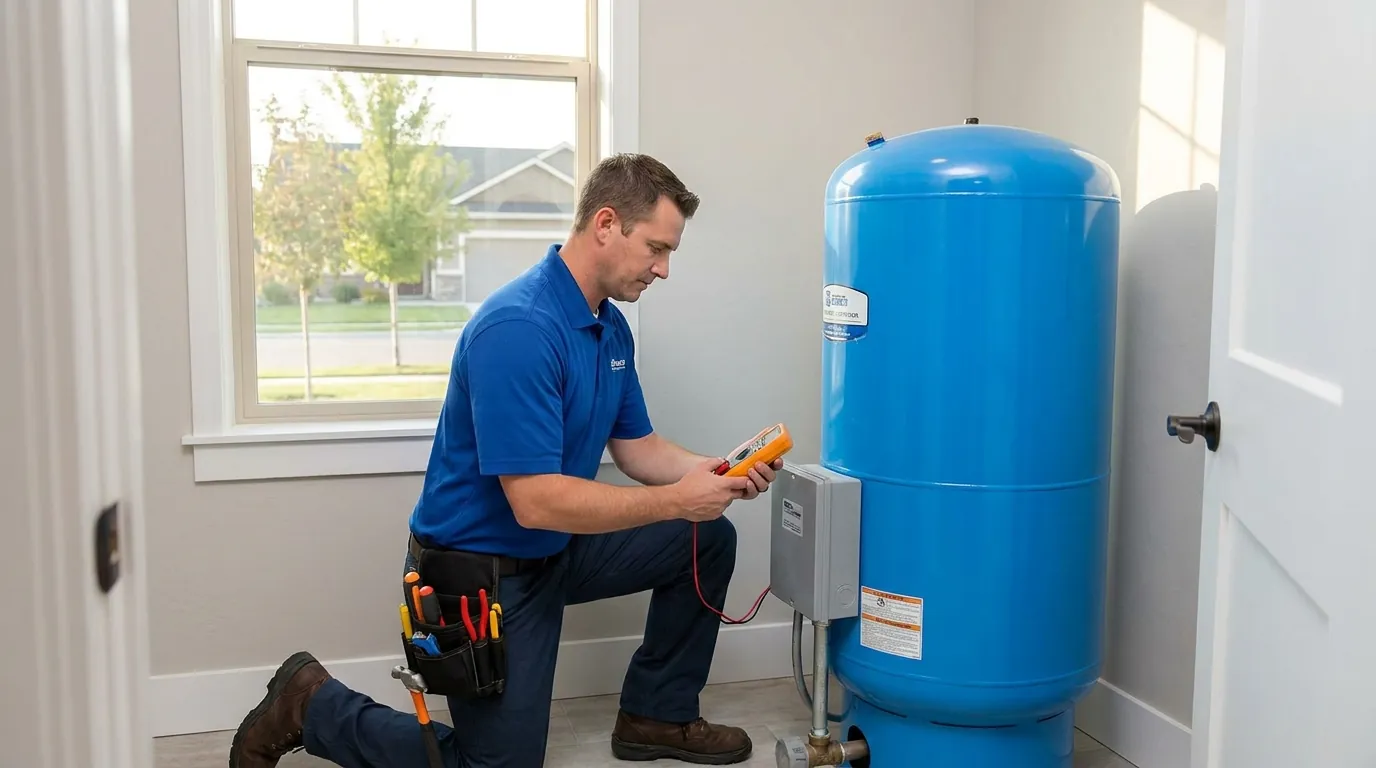
We measure the pressure tank's air charge and confirm the cut-in and cut-out pressures at the switch. A waterlogged tank is one of the most common causes of a pump that short-cycles and wears itself out early.
Routine well pump service and maintenance for Meridian, ID homes. We check pressure, wiring, and water flow to keep your private well running.
If your water comes from a private well, everything in the house depends on a pump you never see. It sits at the bottom of the casing, or in the case of a jet pump, in a pit or basement, and it works quietly until the day it doesn't. Regular well pump service is how you keep that day from arriving without warning. For homes across Meridian and the surrounding Treasure Valley towns, seasonal servicing catches the small failures — a drifting pressure switch, a tank losing its air charge, corroded wiring — while they are still cheap to fix.
Meridian sits in a valley of volcanic and alluvial soils, with dry summers that push irrigation demand high and cold winters that stress above-ground plumbing and pressure tanks. Those conditions change how a well pump ages here. Summers of heavy draw mean the pump cycles hard for months; winter cold can freeze exposed lines and crack fittings if a system isn't buttoned up. A service visit is the moment to check for all of it before it becomes a no-water emergency.
Service is not the same as well pump repair, which addresses a system that has already failed, or well pump installation, which replaces the equipment entirely. Service is the maintenance in between — inspection and small adjustments meant to extend the life of what you have.
A thorough visit looks at the whole system, not just the pump — because most water problems start above ground.
We measure the pressure tank's air charge and confirm the cut-in and cut-out pressures at the switch. A waterlogged tank is one of the most common causes of a pump that short-cycles and wears itself out early.
We look over the breaker, control box, and visible wiring for corrosion, loose lugs, and heat damage. Damp pits and temperature swings are hard on connections over time.
We check how quickly the well recovers pressure under real demand and note any drop in flow that could signal a tiring pump, a clogged screen, or scaling in the plumbing.
Ahead of winter we look at exposed lines, the pitless adapter, and any above-ground components that can freeze during a Treasure Valley cold snap.
The best time to service a well system here is the shoulder seasons — late spring before irrigation demand peaks, and early fall before the first hard freeze. Meridian's summers are dry and long, and a pump feeding both the house and outdoor watering runs far more cycles between May and September than it does the rest of the year. Catching a weak switch or a failing tank in April spares you a July breakdown when demand and outdoor temperatures are both at their worst.
Winters bring the opposite risk. Alluvial ground drains and heaves differently than dense clay, and shallow lines or an exposed pitless adapter can freeze faster than owners expect. A fall service visit is when we confirm the system is ready for the cold.
Wells in the older parts of Meridian and neighboring Kuna, Eagle, and Nampa vary widely in depth, casing, and pump age. Servicing on a regular schedule gives you a record of how your specific well behaves — its pressure, recovery, and current draw — so any change stands out early. If a visit turns up something that needs more than an adjustment, we can move straight into well pump repair.
For most Meridian-area homes, once a year is a sensible baseline, ideally in spring or fall. Wells that feed heavy summer irrigation or that have older pumps benefit from a check before the peak-demand season begins.
It can't stop every failure, but it catches the common precursors — a waterlogged tank, a drifting pressure switch, corroded wiring — while they're cheap to correct. Many no-water emergencies trace back to a small problem that a routine visit would have found.
Watch for spitting or sputtering faucets, pressure that swings noticeably, the pump running more often than it used to, or a rise in your electric bill without a clear cause. Any of these is worth a look.
Yes. Deep wells in the valley usually run submersible pumps set down the casing, while some shallower or older setups use jet pumps above ground. Service covers the whole system in either case, including the pressure tank and controls.
Call to describe the problem and get a quote for work in Meridian, ID.