Well Pump Repair in Meridian, ID
Well pump repair for Meridian, ID homes with no water, low pressure, or short cycling. We diagnose the real cause before pulling the pump.
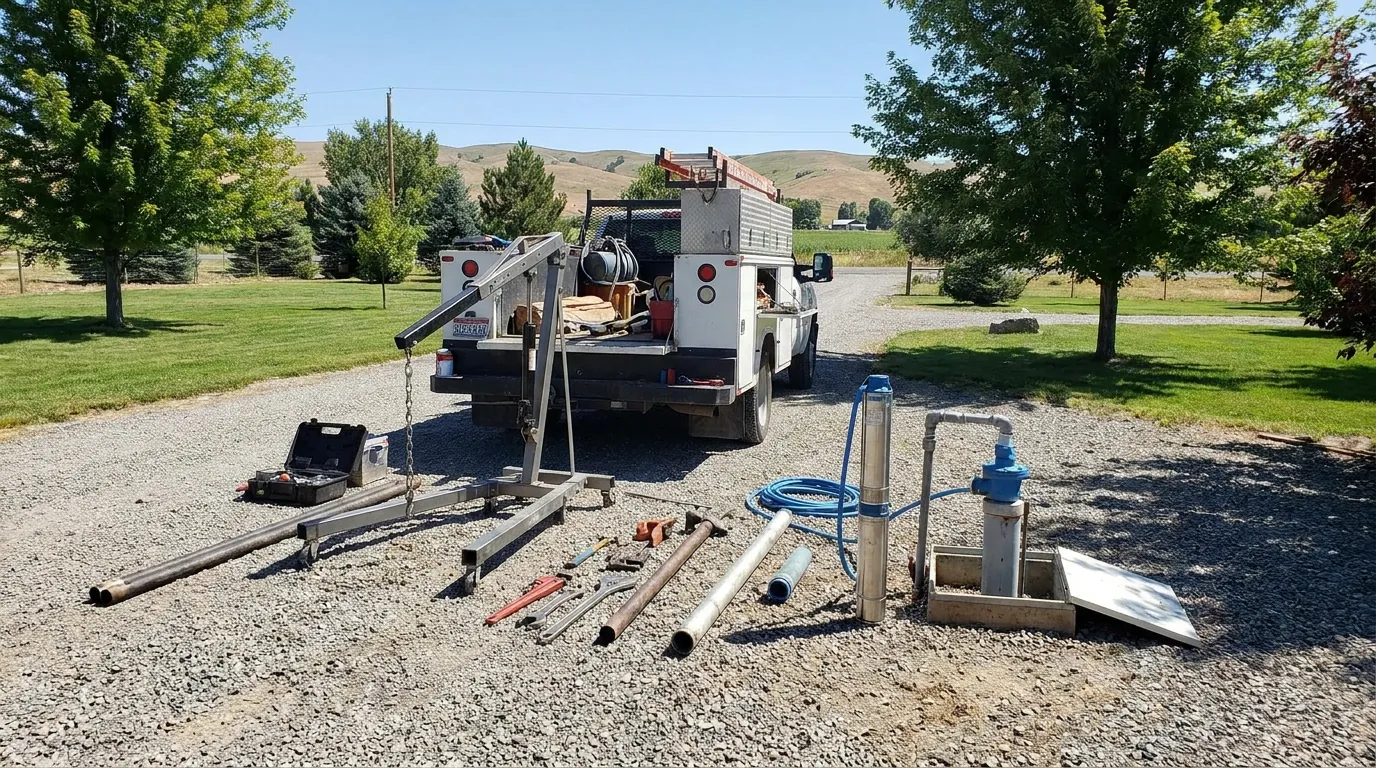
When the water stops or the pressure drops
A well pump problem rarely announces itself politely. One morning the shower fades to a trickle, or the faucets spit air, or a pump you can hear cycling on and off every few seconds even when no one is using water. These are the classic signs that something in a private well system has failed — and in a Meridian household that runs entirely on well water, it's a problem that needs a real answer, not a guess.
Not every symptom means the pump is dead. A surprising share of well pump repair calls resolve above ground: a tripped breaker, a burned pressure switch, a pressure tank that has lost its air charge, or a failed check valve letting water bleed back down the well. The skill in pump and well repair is telling those apart from an actual pump failure before anyone pays to pull equipment out of the casing.
Because our well systems run hard through dry Treasure Valley summers and sit through cold winters, the wear points are predictable. Regular well pump service reduces surprise breakdowns, but when a system has already failed, repair is about working methodically from the cheapest, most accessible causes toward the pump itself.
How we approach a well pump repair
Repairing well and pump problems is a process of elimination — working from the cheapest, most accessible causes toward the pump itself.
-
Confirm the symptom and power
We verify what the system is actually doing — no water, low pressure, or short cycling — and check the breaker, the control box, and the pressure switch. A surprising number of no-water calls resolve at the switch or a tripped circuit.
-
Test the pressure tank and switch
We check the tank's air charge and the switch's cut-in and cut-out action. A waterlogged tank or pitted switch contacts are common, inexpensive fixes that resolve cycling and pressure complaints without touching the pump.
-
Check the wiring and check valve
We measure motor current and insulation resistance where accessible, and look for a failed check valve that lets pressure bleed back down the well. These findings tell us whether the fault is above ground or down the casing.
-
Diagnose the pump itself
If the evidence points below ground, we assess whether the pump needs to be pulled — for a burned motor, worn impellers, or a broken drop pipe. Only then do we take on the larger job of retrieving and repairing the pump.
-
Repair, restore, and verify
We complete the repair, restore pressure, and watch the system through several cycles to confirm it holds and recovers under real demand before we consider the job done.
How local conditions shape the repair
Meridian's volcanic and alluvial soils and its wide range of well depths mean no two repairs look alike. A deep submersible pump set hundreds of feet down the casing is a very different job to retrieve than a shallow jet pump in a pit — and the decision to pull one is never made lightly, because it's the most labor-intensive part of any repair. That's exactly why we rule out the above-ground causes first.
Seasonal timing matters too. Failures cluster in mid-summer, when dry weather drives heavy irrigation and a marginal pump finally gives out under constant demand, and in deep winter, when a freeze cracks an exposed line or a pressure tank. Sediment and mineral scale, common in valley groundwater, wear impellers and clog screens over years, gradually cutting flow until the pump can't keep up.
When a repair turns up a pump that's simply at the end of its service life — an old motor, badly worn impellers, or a well that has changed since the pump was set — replacement can be the sounder decision. In that case we can move into well pump installation, and we'll explain plainly why it makes more sense than repairing equipment that will fail again soon.
Frequently asked questions
My water stopped completely — is the pump dead?
Not necessarily. No-water calls often trace to a tripped breaker, a failed pressure switch, or a control box fault rather than the pump itself. We check those first, because they're far cheaper to fix than pulling a pump from the well.
Why is my pump turning on and off constantly?
Rapid short cycling usually points to a pressure tank that has lost its air charge or become waterlogged, or a failing pressure switch. Left alone, that cycling wears out the pump motor quickly, so it's worth addressing promptly.
Should I repair the pump or replace it?
It depends on the pump's age, what failed, and the condition of the well. A young pump with a bad switch or check valve is worth repairing; an old motor with worn impellers often points toward replacement. We'll lay out both paths honestly.
How do you diagnose a problem down the well?
We work from the symptom and the electrical readings — motor current, insulation resistance, and pressure behavior — to decide whether the fault is above ground or below. That evidence tells us whether the pump needs to come out before we ever start pulling pipe.
Talk to someone about your job
Call to describe the problem and get a quote for work in Meridian, ID.