Low Water Pressure Diagnosis in Meridian
Low water pressure diagnosis for Meridian, ID wells. Finding why pressure dropped — pump, tank, switch, scale, or a falling water table.
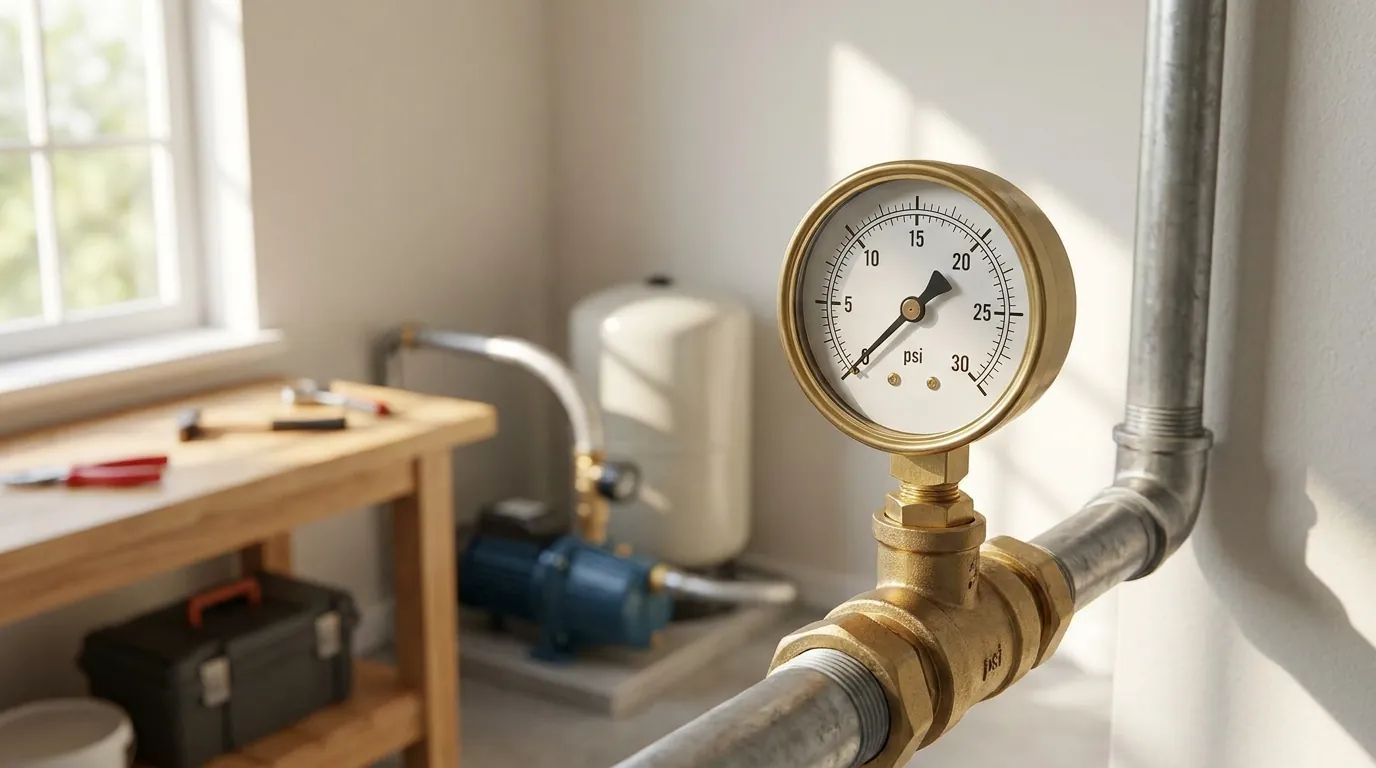
Why pressure drops on a well
Low pressure on a private well has many possible causes, and they don't look very different at the faucet. The pressure switch may be set too low or failing. The pressure tank may be waterlogged. The pump may be worn or scaled down in output. A clogged filter, a partially closed valve, or a leak in the drop pipe can all cut pressure. And in dry Idaho summers, a dropping water table can leave the pump pulling against less water than it was sized for.
Because the symptom is the same across all of these, the value of a diagnosis is in ruling causes in and out methodically rather than guessing and swapping parts. A good diagnosis tells you whether you're looking at a quick surface fix, pressure tank service, or something that leads toward well pump repair.
How the diagnosis works
We move from the easy, cheap causes outward, confirming each before moving on.
-
Measure pressure at the source
We read pressure at the tank and switch and compare it to the household taps, which separates a system-wide drop from a localized plumbing restriction.
-
Check the switch and tank
A low or failing switch and a waterlogged tank are common and inexpensive causes. We verify the cut-in and cut-out settings and the tank's air charge first.
-
Look for restrictions
Clogged filters, scaled fittings, and partly closed valves cut pressure without any fault in the pump. We check these before suspecting the well.
-
Test the pump's output
If the surface is clear, we read the pump's amp draw and output to see whether it's delivering what it should or losing ground to wear or scale.
-
Account for the water table
In dry months we consider whether the pumping level has dropped, which can cause pressure loss the equipment itself can't explain.
Local factors behind pressure loss
Hard, mineral-rich water is widespread across Meridian, Caldwell, and the valley, and scale is a quiet, gradual cause of pressure loss. It builds inside the pump, the check valve, fittings, and filters, slowly choking flow over months so homeowners often don't notice until it's pronounced. A diagnosis that includes checking for scale catches this where swapping a pump blindly would not.
Season matters here more than many expect. In late summer, water tables in parts of Kuna, Nampa, and the Eagle foothills can draw down, and a pump set for the spring level may begin to struggle. Pressure that fades only in the hottest months points toward the water table rather than a failing part. Cold winters add their own trap: a partially frozen line or switch reads as low pressure until it thaws. Tying the symptom to the time of year and your well's specifics is how we avoid replacing a healthy pump — and a full well inspection is the natural next step when the picture is unclear.
Pressure not what it used to be?
Tell us when the drop started, whether it affects every tap, and whether it's worse in summer. Those details point the diagnosis in the right direction.
Serving Meridian and nearby Treasure Valley towns.
Frequently asked questions
Why did my water pressure drop suddenly?
A sudden drop often points to a failed pressure switch, a waterlogged tank, or a leak in the drop pipe. A gradual decline is more likely scale buildup or a worn pump. The timing is one of the first clues we use.
Why is pressure only low in summer?
Seasonal pressure loss usually points to a dropping water table during dry Idaho summers, when the pump has less water to draw from than it did in spring. This is a condition of the well rather than a broken part, and the fix is different.
Could low pressure be the pump or something cheaper?
Often it's cheaper. Switches, tanks, filters, and valves cause low pressure and cost far less than pump work. That's why we check the surface and the easy restrictions before testing the pump itself.
Does hard water cause low pressure?
Yes. Scale from mineral-heavy water builds up in the pump, check valve, fittings, and filters, gradually restricting flow. It's a common and often overlooked cause of slowly declining pressure in this area.