Well Inspection in Meridian
Well inspection in Meridian, ID for home sales, output concerns, and system checkups. Flow, pressure, and equipment condition assessed.
When a well inspection makes sense
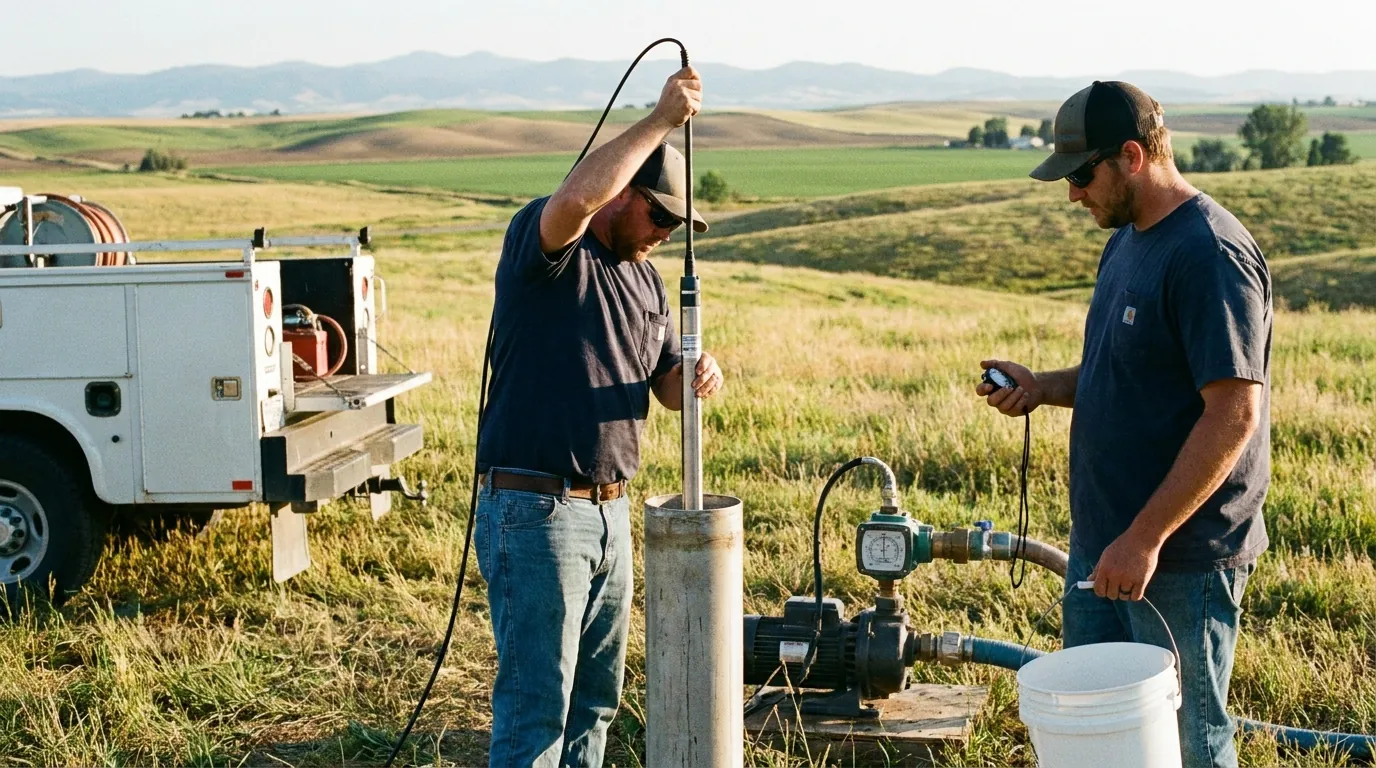
People schedule a well inspection for a few reasons: buying or selling a home with a private well, noticing output that isn't what it used to be, or wanting a baseline before something fails. An inspection measures how the system is actually performing — flow rate, pressure behavior, recovery, and the condition of the visible equipment — rather than waiting for a breakdown to reveal the weak point.
If you've been searching for well drilling companies near me or comparing well drilling rates, an inspection is often the right first step: it tells you whether your existing well and pump have life left or whether deeper work is warranted, before you spend on anything larger. The findings also feed directly into decisions about well pump replacement and pressure tank service.
What an inspection checks
A thorough inspection covers performance and equipment, above ground and down the well.
-
Flow and recovery
We measure how much water the system delivers and how quickly the well recovers, which shows whether the well is keeping up with the pump and the household.
-
Pressure behavior
We watch cut-in and cut-out pressures and how the system holds pressure during draws, which exposes tank, switch, and pump issues.
-
Electrical readings
Amp draw and insulation resistance on the pump wiring indicate whether the submersible motor is operating within spec or heading toward failure.
-
Equipment condition
We inspect the wellhead, cap, pressure tank, switch, gauge, and visible wiring and piping for corrosion, leaks, and freeze exposure.
-
Written summary
You get a plain-language account of what's working, what's marginal, and what needs attention, so you can plan rather than react.
Why local conditions matter to the result
Across Meridian and the surrounding valley, well depth and water table vary widely, and that shapes what an inspection should look for. A deeper well in Kuna or Nampa stresses the motor differently than a shallower one, and foothill wells near Eagle or Robie Creek can show a water level that moves with the season. Dry Idaho summers draw some water tables down, so an inspection in late summer may reveal a pumping level that spring testing would hide — useful information if you're weighing well drilling costs against staying with the current well.
Mineral-heavy water is common here and leaves scale on pumps, check valves, and switches that an inspection can catch early. Cold winters add freeze risk to any above-ground equipment, so we note exposure during the inspection. Taken together, these local factors are why a generic checklist falls short and why we tie the readings to your specific well. When output is the concern rather than a sale, a low water pressure diagnosis often runs alongside the inspection.
Need a well checked?
Whether it's for a home sale or a drop in output, tell us the situation and we'll explain what the inspection covers for your well.
Serving Meridian, Kuna, Eagle, Nampa, Boise City, Caldwell, and Robie Creek.
Frequently asked questions
What does a well inspection include?
It covers flow rate and recovery, pressure behavior, electrical readings on the pump, and the condition of the wellhead, tank, switch, and visible plumbing. You get a written summary of what's sound and what needs attention.
Do I need an inspection to buy a home with a well?
Many buyers choose one so they understand the condition and output of the well before closing. It's a practical way to learn whether the pump and tank have life left and whether the well keeps up with the home's demand.
Can an inspection tell me if I need a new well?
It can show whether your current well and pump are performing adequately or declining. If flow and recovery are poor, we'll explain the options, which is useful if you've been researching well drilling costs for your area.
How does the season affect inspection results?
Dry late-summer conditions can lower the water table and reveal a pumping level that spring testing would miss. We note the time of year so you understand how the readings may shift through the season.