Well Pump Replacement in Meridian
Well pump replacement in Meridian, ID. How a pump is sized to your well depth and water table, what the swap involves, and how to decide.
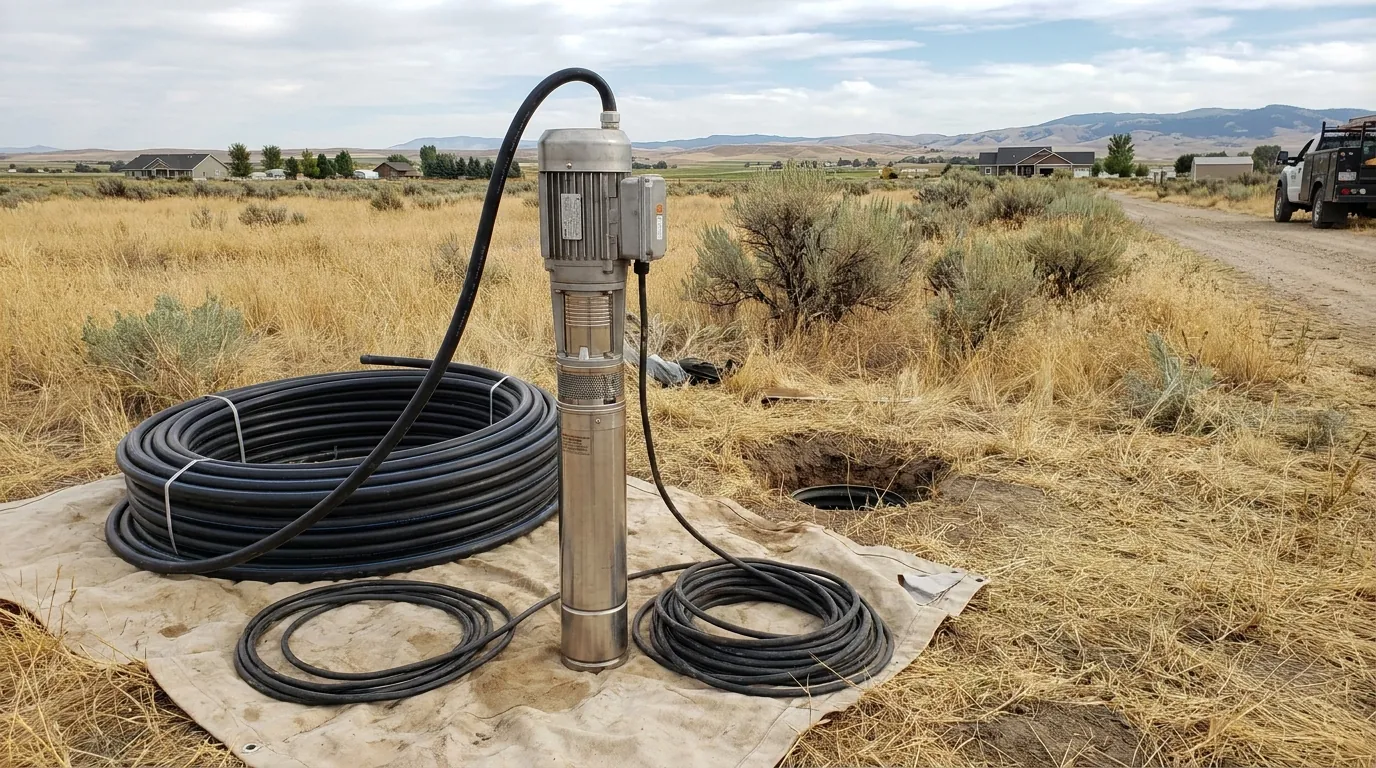
When replacement is the right call
A pump reaches the end of its life when the motor shorts or seizes, when output has dropped off from years of scale and wear, or when a repair would cost a large share of a new unit on a pump that is already old. The common signs are water that never fully recovers pressure, a motor that trips the breaker on startup, or a system that has been limping through repeated repairs. When the testing points to the motor rather than a surface part, replacement is usually the honest answer.
Replacement is not simply swapping like for like. The right pump depends on your well's depth, the static and pumping water level, the number of fixtures the home runs, and the flow the well can sustain. An undersized pump leaves you short on pressure; an oversized one draws the well down and cycles hard. We size the unit to the real load rather than to whatever came out, which is where a well inspection and the data from a low water pressure diagnosis feed directly into the decision.
What a replacement involves
Replacing a submersible pump means working the full column of pipe, wire, and fittings out of the well, not just the pump at the bottom.
-
Confirm the pump has failed
We verify the diagnosis with electrical readings and surface tests so the replacement is warranted and not a surface fault in disguise.
-
Gather the well's specifics
Depth, casing size, static water level, pumping level, and household demand determine the horsepower, stages, and setting depth of the new pump.
-
Pull the existing assembly
We bring up the drop pipe, wire, torque arrestor, and old pump, inspecting the check valve and splices as they come out so nothing worn goes back in.
-
Install the matched unit
The new pump goes in with fresh wire splices, a check valve, and a torque arrestor, set at the depth your water table supports, with the correct safety rope.
-
Pressurize and verify
We set the pressure switch, confirm the tank's air charge, run the system, and check amp draw and cycle time so the installation starts life running within spec.
How the valley changes the sizing
Water-table depth across the Treasure Valley is not uniform. A well in parts of Kuna or Nampa may sit deeper than one in a riverside area, and foothill wells near Eagle or Robie Creek can draw from fractured ground with a water level that moves seasonally. Dry Idaho summers pull some water tables down, so a pump set at the right depth in spring can struggle in August if it was never sized with that drawdown in mind. We account for the pumping level, not just the resting level, so the pump stays submerged through the dry months.
Mineral content matters too. Hard, scale-forming water is common here and shortens a pump's working life, which is one reason matching the pump to the actual demand helps avoid the overwork that drives early wear. Cold winters are the other factor: the above-ground side of the system — tank, switch, and piping — needs protection from freezing, and we check that during the swap rather than leaving a new pump feeding a vulnerable setup. If your current trouble is really a tank issue, pressure tank service may be the better starting point, and we'll say when that's the case.
Thinking about a new pump?
Tell us your well depth if you know it and what the system is doing now. We'll explain whether replacement fits and how the new pump would be sized.
Serving Meridian, Kuna, Eagle, Nampa, Boise City, Caldwell, and Robie Creek.
Frequently asked questions
How long should a well pump last?
A submersible pump commonly runs eight to fifteen years, though hard water, frequent cycling, and heavy demand shorten that. A pump that has needed repeated repairs or has lost output over time is often near the end regardless of its exact age.
Can you reuse my old pipe and wire?
We inspect the drop pipe, wire, and splices as they come out. Sound components can stay, but corroded pipe, cracked insulation, or weak splices are worth replacing while the well is open, since reopening it later costs the same labor again.
How is the new pump sized?
We base it on well depth, static and pumping water levels, casing size, and the number of fixtures the home runs at once. Sizing to the real load matters because an undersized pump leaves you short on pressure and an oversized one draws the well down and cycles hard.
Do you have to pull everything out of the well?
For a submersible pump, yes — the pump sits at the bottom of the drop pipe, so the whole column comes up to reach it. That's why the inspection of pipe, wire, and check valve happens during every replacement.